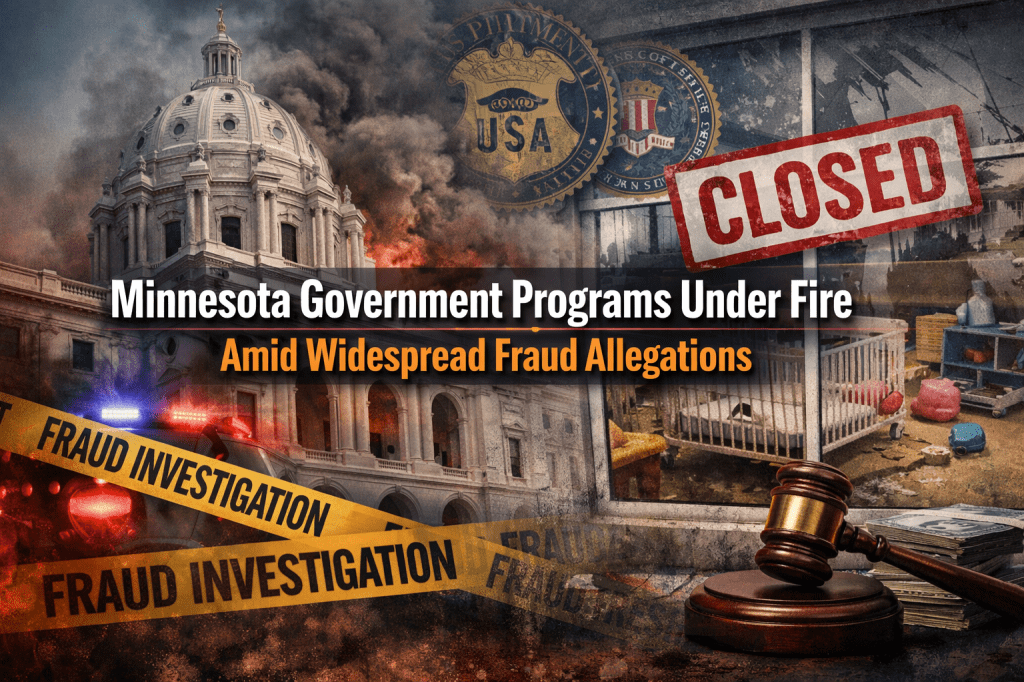
The government of Minnesota has been in the news recently due to rampant fraudulent activity within government programs that are run by the state. The Minnesota government has a childcare assistance program (CCAP) which is intended to help subsidize the cost of childcare. Through investigative journalism, it has been uncovered that many businesses claiming these taxpayer credits have not actually provided the services that they are being paid for. While these allegations have not yet been substantiated, it is a bad look for Minnesota due to lack of enforcement, prevalence of fraud, and overall poor care for taxpayer money.
This is not the first time in recent years where Minnesota has been caught for allowing rampant fraud in their programs. Minnesota has already been dealing with many fraud cases coming from the Federal Child Nutrition Program. Federal prosecutors are currently estimating that fraud in Minnesota could total more than $9 billion. The chairman of the House Oversight and Government Reform requested that the U.S. Justice Department provide a briefing of the massive fraud that had already been uncovered. This request was made on the 22nd of December, four days before the CCAP fraud was made public. The narrative throughout many media outlets is that Governor Tim Walz and the Minnesota leadership have been “asleep at the wheel” while fraud has run rampant.
The CCAP fraud was brought to light by one YouTube video posted to Nick Shirley’s YouTube page. Nick is a conservative social media journalist who has 1.26M subscribers on YouTube. While only 23 years old, he has built a big social media presence with millions of views. Due to the staggering numbers of fraud in the state, he decided to do some investigations into other programs that have not been getting as much attention. He uncovered that many businesses claiming these child care credits are often abandoned and not providing childcare. He films himself confronting owners of these childcare facilities that are completely vacant despite the business claiming money for childcare services. This story took off due to attention from President Trump and Vice President Vance. President Trump has already called Walz a “grossly incompetent man”, and these allegations do not do Governor Walz any credit.
President Trump has called Minnesota “a hub of fraudulent money laundering activity”. The amount of fraud in so many different programs clearly indicates a glaring issue Minnesota has in detecting and preventing fraud. The federal government is stepping in and increasing fraud investigation within the state. The U.S. Department of Health and Human Services is freezing all child care payments, $185 million annually, to Minnesota in the aftermath of these allegations.
Somalis Role in Fraud
Somali immigrants are at the forefront of fraud cases in Minnesota. This is because a vast majority of people who have been convicted of government fraud in the state recently are Somalis, despite making up less than 2% of the state’s population. Additionally, Shirley showed many Somali run “businesses” in his video, implying that they are behind the rampant fraud. Trump has said, “we do not want them (Somalis) in our country” during a cabinet meeting because of their high welfare rates and propensity for fraudulent activities.
What should be a story about fraud and holding the government accountable for how they distribute taxpayer funds has become a segue for discrimination against Somali immigrants. Anyone defrauding taxpayers should be held accountable, and the government should have better measures in place to ensure widespread fraud is not possible.




Leave a comment